
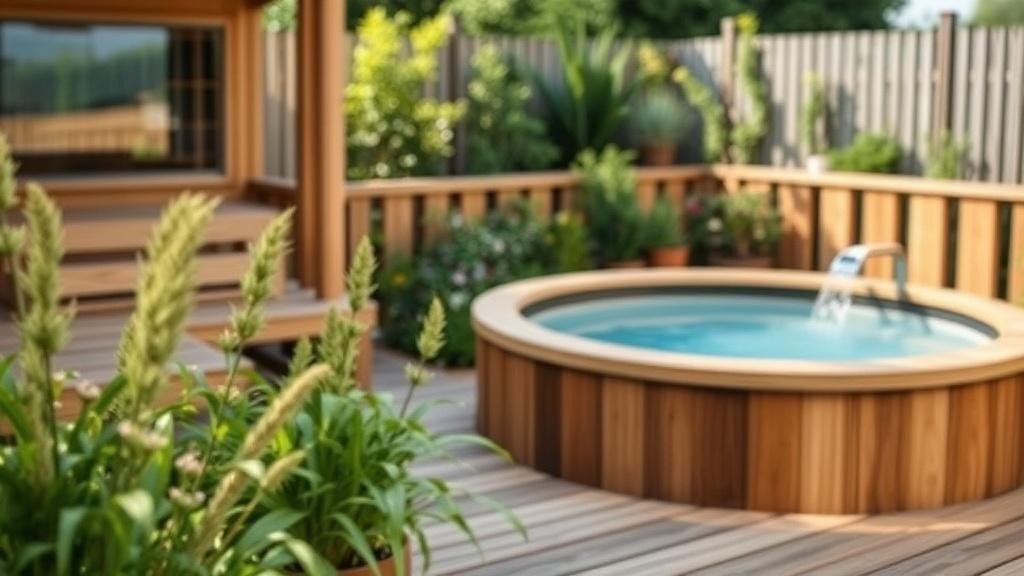
Picking the Right Cold Plunge Tub for Your Space
For sweat Decks cold plunge, the useful answer is practical: what makes the setup safe, comfortable, easy to maintain, and worth using when the novelty wears off.
My neighbor Greg spent three weekends last fall building a gravel pad behind his detached garage, ran a dedicated 20A circuit to it, and dropped a stainless cold plunge tub on it the day before Thanksgiving. By January he’d missed exactly two mornings. I asked him what he’d do differently. “I’d have poured concrete,” he said, pointing at where the gravel had shifted under one corner. “Everything else I’d do the same.”
That pretty much sums up cold plunge ownership: the unit itself is the easy part. The pad, the electrical, and the climate math are where projects go right or sideways. Most home builds land between $4,500 and $14,000 depending on materials and chiller class, and the gap between a setup you love and one you resent usually has nothing to do with the price tag.
What the Spec Sheet Actually Tells You (and What It Doesn’t)
Most cold plunge spec sheets list the same handful of numbers: chiller horsepower, tub dimensions, filtration type, insulation rating. Here’s how to read them without getting lost.
Chiller HP vs. tub volume. This is the relationship that matters most. A 1/3 HP chiller can hold 50°F in a small insulated tub in a temperate climate. That same chiller in a Phoenix garage in August will run almost continuously, burn through electricity, and die young. A 1 HP unit is overkill for a 60-gallon tub in Portland but perfectly sized for a 100-gallon tub in Texas. Read the manufacturer’s sizing chart. Forum advice is almost always wrong because it ignores ambient temperature.
Filtration and sanitation. The better residential units combine ozone, UV, and a 5-micron filter cartridge. This trio keeps water clear for 6 to 12 weeks between full drains if you test pH and sanitizer weekly. Units that skip UV or ozone require more frequent water changes and more hands-on chemical management. Not a dealbreaker, but something to factor into your actual weekly routine.
Tub material. Insulated acrylic shells are lighter, cheaper, and fine for most residential use. Stainless steel inserts last longer (15 to 20 years versus 8 to 12 for acrylic) and feel more substantial, but they also weigh more, which circles back to the pad conversation.
Footprint. Most residential tubs run 24×60 to 32×84 inches. Measure twice. You want at least 18 inches of clearance on the chiller side for airflow and service access.
The Boring Truth About Pad and Electrical Work
A full tub of water sitting on a steel or acrylic chassis puts 800 to 1,200 pounds on a small footprint. That’s roughly a grand piano concentrated into about 14 square feet. Ignore the pad and you’ll end up shimming, releveling, or worse.
Gravel pads (4 inches compacted with a drainage layer) work on stable, well-drained soil in mild climates. They’re cheap, maybe $400 to $900 in materials, and a weekend project. The catch is they can shift. Greg’s corner settlement was maybe half an inch over three months, enough to notice, not enough to cause damage. Yet.
Concrete pads (4 inches, reinforced) are the right call on soft soil, clay, or anywhere with freeze-thaw cycles. Budget $1,200 to $2,400. Overkill for some installs, insurance for others.
Electrical is where people get casual and shouldn’t. Most residential cold plunge tubs run on standard 110V, which sounds simple. It is simple, if you have a properly grounded GFCI outlet on its own circuit within 25 feet. If the nearest outlet shares a circuit with a shop vac or pool pump, or if you’re running the cord through a window (please don’t), get an electrician to pull a dedicated 20A line. Some commercial-grade chillers require 240V, which always means a licensed electrician and usually a permit.
Does the Science Actually Hold Up?
Cold water immersion research has gotten more rigorous in the last decade, and the honest summary is: encouraging for healthy adults, with caveats.
Heinonen and Laukkanen reviewed cold-water immersion outcomes in 2018 (Frontiers in Physiology) and found reductions in self-reported muscle soreness, modest improvements in mood, and measurable changes in catecholamine signaling after 2 to 5 minute immersions at 50°F to 59°F. The mood piece is the one most home users notice first and care about most. It’s also the hardest to separate from placebo in study design, which is worth being honest about.
Allan and colleagues published a 2022 systematic review in the European Journal of Applied Physiology examining cold-water immersion after resistance training. They reported recovery benefits but flagged that very frequent cold immersions immediately after lifting may blunt some hypertrophy signaling. If muscle growth is your primary goal, the practical takeaway is to separate cold sessions from heavy training by at least 4 hours. For most home users doing a morning plunge and an evening lift (or vice versa), this is a non-issue.
The cardiovascular response, though, deserves more respect than it usually gets online. Cold exposure spikes heart rate and blood pressure within seconds. Adults with arrhythmias, uncontrolled hypertension, Raynaud’s phenomenon, or who are pregnant need to clear cold immersion with a physician before any home use. This isn’t a blanket disclaimer; it’s a specific physiological reality.
See also: Understanding Crypto Payment Systems
What It Actually Costs (All-In, Not Just the Sticker)
Sticker price is a poor proxy for project cost. Here’s what the full picture looks like.
A residential insulated tub with an integrated chiller runs $4,500 to $7,500. Commercial-grade stainless builds with full filtration land at $9,000 to $14,000. The stock-tank DIY route ($400 to $900) works if you’re willing to haul ice bags regularly, but “willing” tends to erode around week three.
Add the pad ($400 to $2,400 depending on gravel vs. concrete), any wiring ($0 if your existing outlet works, $600 to $1,800 for a new circuit or 240V run), and a small budget for accessories and first-year maintenance (filter cartridges, test strips, a decent cover if one isn’t included).
On the tax side, some home wellness equipment can be reimbursed through HSA or FSA accounts when a Letter of Medical Necessity is on file. Services like TrueMed issue LMNs after a short clinician review for conditions where cold therapy is a recognized treatment input. Eligibility is patient-specific and IRS rules are strict. Talk to your tax advisor before assuming this will work for you.
Appraisers won’t add dollar-for-dollar return on a cold plunge, but a clean outdoor wellness setup increasingly reads as a selling feature in Northeast and Pacific Northwest markets. Think of it like a well-done fire pit: not a line item in an appraisal, but a reason a buyer picks your house over the one down the street.
See also: Understanding Crypto Payment Systems
Purpose-Built Tub vs. DIY: The Honest Comparison
A purpose-built insulated tub with a 1 HP chiller holds 39°F to 45°F all day with zero manual intervention. You fill it, set the temperature, and maintain the water chemistry. That’s it.
A stock-tank or chest-freezer conversion can hit similar temperatures, but you’re either buying and hauling ice (stock tank) or relying on a compressor that was designed to keep beer cold, not cycle thousands of times a year (chest freezer). Chest-freezer conversions also lack filtration, which means more frequent draining and cleaning, and they sit in a mechanical gray zone where warranty coverage is, let’s say, theoretical.
The right answer isn’t the cheapest option or the most expensive one. It’s the one that matches your climate, your space, your tolerance for maintenance, and the routine you’ll actually sustain past February.
For a longer comparison of actual model lineups and price tiers, see Sweat Decks cold plunge. It breaks down sizing, chiller specs, and install considerations in plain language, and it’s the kind of reference page worth bookmarking before you commit.
When You Need a Professional (Not a YouTube Tutorial)
Three moments in a cold plunge project where spending money on expertise saves money later:
The pad. Especially in freeze-thaw climates or on soft soil. A pad that settles or cracks under a loaded tub is far more expensive to fix once the unit is sitting on it.
The wiring. Any 240V work requires a licensed electrician, full stop. Even 110V work on a new dedicated circuit is worth doing right. A GFCI outlet next to a water-filled tub is not the place for creative DIY electrical.
The medical conversation. If you have any cardiac history, blood pressure issues, Raynaud’s phenomenon, are pregnant, or manage a chronic condition, a 10-minute conversation with your physician before your first session is the single best investment in this entire project. The research is encouraging for healthy adults. “Encouraging for healthy adults” is not the same as “safe for everyone.”
FAQs
How loud is a cold plunge chiller?
Most residential chillers run at 45 to 55 dB at one meter, roughly the volume of a quiet conversation or a refrigerator compressor. Place the unit where the hum won’t bother neighbors or adjacent bedrooms, especially if the chiller cycles at night.
Can I run a cold plunge tub year-round in cold climates?
Yes, with caveats. Insulated tubs with integrated chillers handle below-freezing ambient temperatures if the chiller’s operating range supports it. Check the manufacturer’s spec sheet for low-temperature performance. Some units require a freeze-protection mode that keeps water circulating.
What’s the lifespan of a quality cold plunge tub?
Stainless steel tubs last 15 to 20 years with basic care. Chillers are typically replaced or rebuilt every 6 to 10 years. Acrylic shells have a shorter structural life but are easier and cheaper to replace.
Do I need a permit?
The tub itself rarely requires a building permit. The electrical permit for a new circuit (especially 240V) is almost always required. Call your local building department before ordering. Five minutes on the phone can save you a surprise inspection letter.
How quickly does a cold plunge reach target temperature?
A chiller pulls a freshly filled tub from tap temperature to 45°F in 3 to 8 hours depending on chiller size, tub volume, and starting water temperature. After the initial cooldown, a properly sized chiller maintains set temperature with minimal cycling.
How often do I need to change the water?
With ozone, UV, and a 5-micron filter, most users get 6 to 12 weeks between full drains. Test pH and sanitizer weekly. If the water looks cloudy or smells off, drain it regardless of the schedule.
Is a cold plunge worth it if I don’t have a sauna?
Absolutely. Contrast therapy (alternating heat and cold) has its own body of evidence, but cold immersion alone shows benefits for perceived recovery and mood in the existing research. You don’t need a sauna to justify the purchase.
Disclaimer. This article is general consumer information, not medical advice. Cold therapy carries real cardiovascular load. Anyone with arrhythmias, uncontrolled hypertension, Raynaud’s phenomenon, recent cardiac events, or who is pregnant should consult a physician before starting any cold-plunge routine.
HSA and FSA reimbursement on wellness equipment is patient-specific and depends on a Letter of Medical Necessity from a clinician. Talk to your tax advisor before assuming a purchase qualifies.